About Me
Hi, I'm Ruth Sizemore, LPC, BCN
Before becoming a licensed therapist, somatic guide and neurofeedback practitioner, I spent over a decade working as a nurse, in a women's clinic, a triage center and specialized Native-American hospital . That experience shaped how I understand the body—not as something separate from the mind, but as an intelligent system that’s always communicating and changing.
It’s part of why I work slowly, pay close attention to physical cues, and prioritize nervous system safety along the whole way. I’m comfortable sitting with intensity, uncertainty, and vulnerability, and I trust the body’s capacity to move toward healing when it’s given the right conditions.
In my practice, I have a regulation-first approach and work in three separate,supportive dedications( Neurofeedback, Somatic Practice and Specialized Talk Therapy) all together to support my RAI approach, to practice Regulation, Access, Integration) during your work and process.
It is my pleasure to work in this field and I hope to have a chance to work with you as well!


Philosophy of Care
A Regulation-First, Mind–Body Pathway
Healing doesn’t begin with insight alone.
It begins when the nervous system feels safe enough to receive support.
The brain and body are intricately connected. When the nervous system is overwhelmed, the body holds tension, protective patterns, and unfinished survival responses. In those states, even the most thoughtful therapy can feel exhausting or ineffective.
In my practice, we start with regulation, because without it, therapy often asks too much of a system that’s already working hard.
Neurofeedback provides a stable foundation by working directly with the brain to support nervous system regulation. As the brain settles, the body naturally begins to release tension and shift toward the parasympathetic state of rest and digest. From this place, the system becomes more available for healing.
This creates the conditions for real integration.
Where Somatic Work Comes In
Once the nervous system begins to settle, mind/body connection becomes the language of healing.
With neurofeedback supporting regulation, therapy can gently engage the body’s signals — sensation, breath, emotion, and felt sense — without overwhelming the system. Somatic processes help the nervous system integrate safety, expand emotional range, and reconnect the mind and body in a way that feels supportive rather than invasive.
Rather than pushing through discomfort, we listen to the body’s cues and allow change to emerge from within.
This is how healing becomes embodied — not just understood.
Neurofeedback Breakthroughs
This amazing tech will support integration by helping the brain develop healthier, more efficient patterns of activity. For individuals experiencing trauma, loss or burnout, the nervous system often becomes stuck in states of hyperarousal, shutdown, or chronic stress. Through real-time feedback, neurofeedback promotes self-regulation, improving emotional balance, attention, sleep and resilience. As the brain becomes more regulated, therapy and daily coping strategies often become easier to process and integrate, allowing individuals to respond to challenges with grater flexibility rather than stuck automatic survival responses.
Education and Certifications
Ketamine (KAP) License- Fall 2025 (Practicing 2 years)
Completed all regulations, practice and actions. Currently licensed to practice KAP in Oklahoma.
BCN (Neuro Feedback) License- Spring 2022- (Practicing 6 years)
Trained and Certified in all requirements with BCN license. Currently licensed to practice BCN in Oklahoma.
University of NSU (Masters of Psychology)- Fall 2019- (Practicing 8 years)
Graduated with Honors with a Masters in Psychology. Currently licensed to practice as an LPC in Oklahoma.

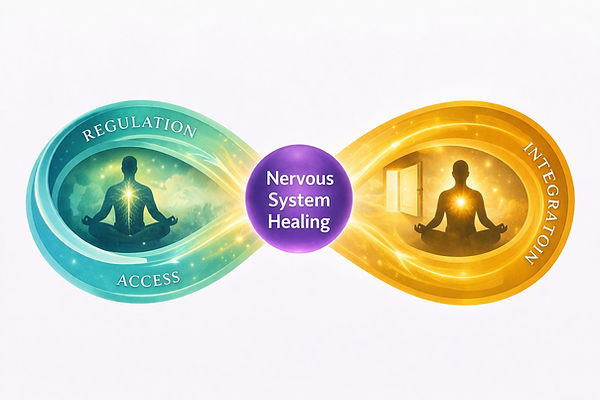


What is your practice principles?
Regulation. Access. Integration
When the nervous system settles, the body can finally receive what it has needed:
-
Safety without effort
-
Support without collapse
-
Connection without threat
From this place, therapy deepens, somatic integration unfolds, and secure attachment becomes felt — not just understood.
Healing becomes something your system can receive, not something you have to push for. Each patients approach is custom designed for each individual, where we will search for regulation, work for greater and greater access and design it all to be able to integrate into your day-to-day life.